
Health Economics
Introduction
Resources are limited, and decision-makers and funders often face difficult choices about how to use them efficiently and effectively. Health economics helps guide these decisions by comparing costs and outcomes and by assessing the trade-offs involved. This learning resource provides a practical introduction to key concepts and tools in health economics.
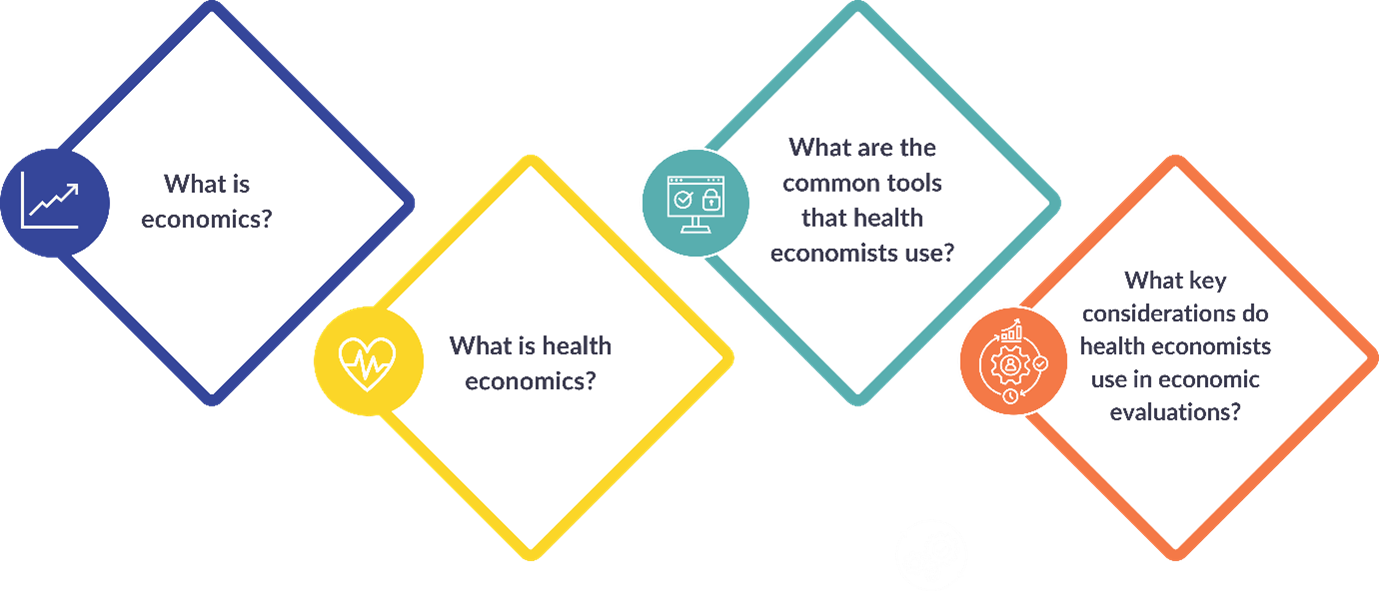
The following topics are discussed in this learning resource.
This learning resource was developed by Deakin Health Economics (DHE), led by Mary Rose Angeles, Suzanne Robinson, Kate Huggins, Olivia King and Ali Buccheri, as part of the DELIVER program.
It provides a brief introduction to health economics, including the types of questions health economics addresses and some of the tools commonly used in this field. The information presented here is introductory in nature and is not intended to be comprehensive.
For those interested in further learning, a range of comprehensive courses and training opportunities are available at Deakin Health Economics (DHE). DHE is one of the largest health economics teams in Australia, and they offer support and expertise across many areas in this field.
For more information or to get in touch, please contact us through this website. https://iht.deakin.edu.au/our-research/deakin-health-economics/
- Economics analyses how people as individuals and as societies make decisions about what to do with scarce resources (Robinson, 2025).
- The idea in economic analysis is that resources are limited (scarcity) and that we have to make choices about how to use resources.
- By choosing to use resources in one way, those same resources will not be available for other potentially beneficial pursuits. This trade-off is known as opportunity cost (Robinson, 2025; Wiseman, 2011).
- Economics offers us a framework to support decision making about resource allocation (Wiseman, 2011).
- Economic analyses examine costs and outcomes (i.e., value for money) (Robinson, 2025).
- Economic analysis can incorporate an equity lens to assess how resource allocation decisions impact different population groups, including those with higher need.
Box 1 Key Concepts
|
Scarcity is a concept in economics where resources are limited and there are not enough resources available to satisfy all our wants and needs. Health care is an example of a ‘scarce’ resource. Opportunity cost is the “value of forgone benefit which could be obtained from a resource in its next-best alternative use”(Drummond et al., 2015a). When we make choices to use money, time or other resources, we sacrifice the chance to use those same resources for something else. |
- Health economics is a sub-discipline of economics, addressing issues in health and health care more broadly (Guinness & Wiseman, 2011; Wiseman, 2011).
- Health economics examines how society can best allocate limited resources among competing uses. It addresses questions such as:
- What health care should be produced?
- How should health care be produced?
- Who shall receive health care?
Most health systems are concerned with achieving efficiency and equity.
- Efficiency is when there is optimal use of resources to achieve the highest possible outcomes or benefits. Some questions under this concept include how to reduce hospital in-patient length of stay? To what extent can certain services be delivered by nurses (when appropriate) instead of doctors? The two types of efficiency are noted below:
- Technical efficiency refers to maximising output from given quantities of inputs (Robinson, 2025). Technical efficiency is concerned with reducing waste for a given resource (Wiseman, 2011). For example, is it more efficient for a clinician to run a group exercise program or provide one-to-one exercise support?
- Allocative efficiency refers to deciding whether to do something, or how much of it to do, rather than how to do it (Robinson, 2025). Allocative efficiency focuses on the optimal distribution of health care resources. For example, should we allocate more resources to cancer screening or cancer treatment? What mix of allied health services will best meet the community’s needs?
- Equity is concerned with how benefits are fairly distributed (Wiseman, 2011). Health equity is achieved when everyone can attain their full potential for health and well-being (Robinson, 2025).
- Horizontal equity refers to a situation where people with the same needs have access to the same treatment.
- Vertical equity refers to a situation where people with greater needs have access to more treatment.
Health economics can be used to support decision making across multiple levels, including the population level – either for the whole population (e.g., Australian population) or for a local population (e.g., Victorian population, hospital catchment) – as well as clinical and individual patient levels.
In the context of scarce resources, the provision of one intervention—let us say intervention A—means that a second or alternative service, B, is displaced (Wiseman, 2011)
Here are some examples of health economics questions:
- Population level (whole Australian population-level): How much should the government be willing to pay for a medication (for example, a weight-loss medication) to be listed on the Pharmaceutical Benefits Scheme (PBS) (Clayton, 2024)?
- Population level (state-level): Is banning junk food advertising on government-owned transport assets (such as buses, trains, and roadside billboards) a cost-effective strategy, compared with no intervention, for reducing obesity-related disease (Ananthapavan J & Angeles MR, 2023)?
- Population level (health service-level): From the perspective of a health service in western Victoria, is implementing a personalised telehealth intervention for chronic disease management cost-effective (Mudiyanselage et al., 2023)?
- Individual level: From the perspective of patients with substance dependence, does using a computer-based therapy program in additional to usual treatment provide good value for money (Olmstead et al., 2010)?
Box 2 Key Concepts
|
Efficiency is a concept that illustrates how to maximise outputs (benefits) for a given amount of available resources, or how to minimise the resources (e.g., costs) for a given level of outputs (benefits) (Wiseman, 2011). Equity concerns how benefits are distributed across the population (Wiseman, 2011), and is achieved when everyone can attain their full potential for health and well-being (health equity) (Robinson, 2025). |
Health economists provide decision makers with evidence and support to help allocate resources more efficiently, with the aim of maximising health outcomes within budget constraints, while recognising that these decisions are also influenced by non-economic considerations. This helps ensure a sustainable and effective health care system.
Depending on the research context, health economists may lead and support research in different ways. Health economists can lead health economics research or can partner with other health researchers to provide health economic expertise input into the research development and design.
For new and emerging researchers, health economists can provide a range of supports depending on the needs of the researcher. For example, they can provide early advice on how health economic principles can be integrated into the research aims, provide advice on building health economic methods into the research design, and support health economics data analysis. If you are an emerging researcher considering integrating health economics into your project, it is essential to consult with a health economist early for advice on the most suitable type(s) of economic analysis for your project and to ensure that the research design is appropriate at the outset.
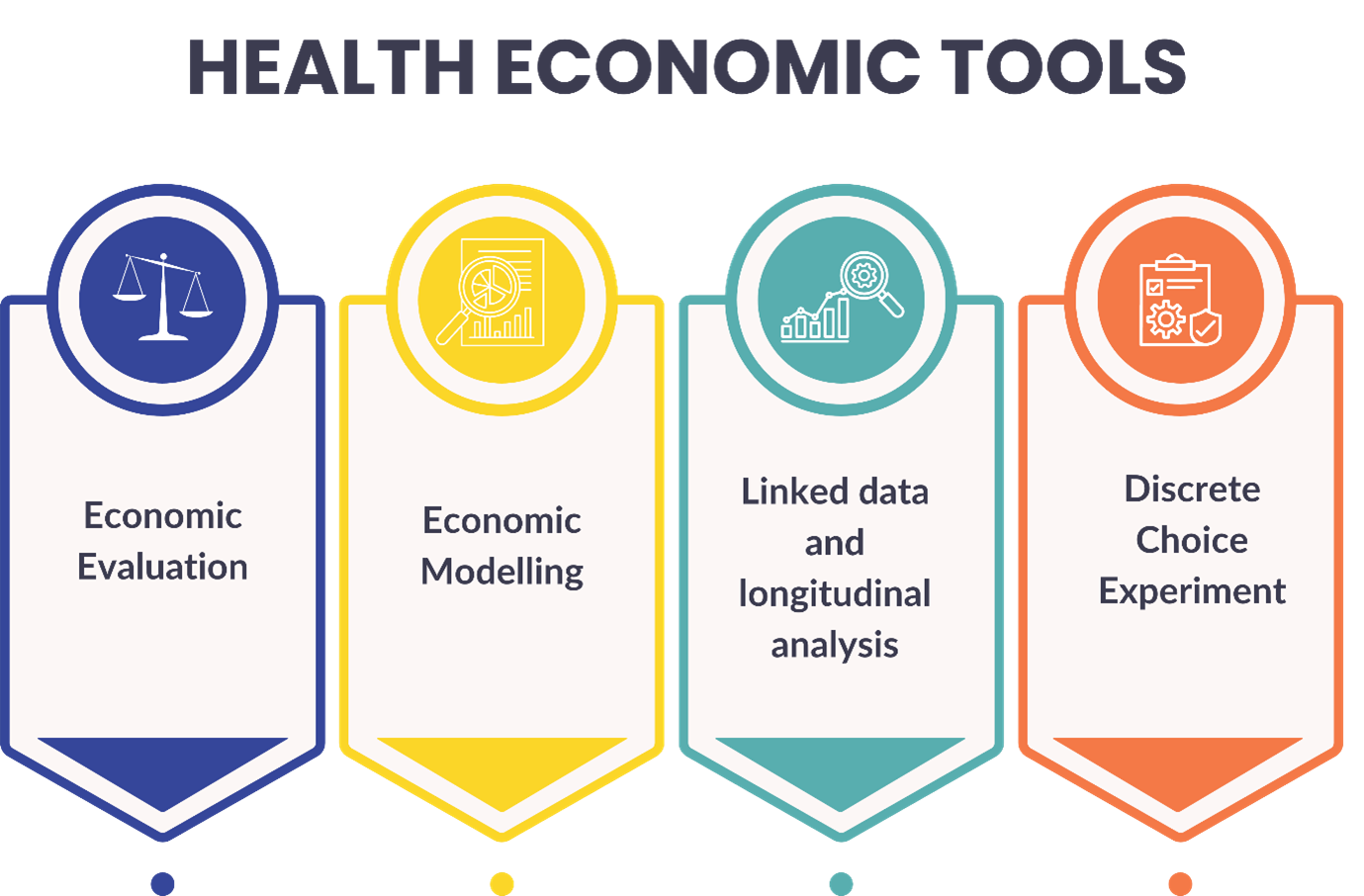
Health economists have a number of tools that they use to support them in their work. The figure below presents some common methods used by health economists which we will discuss briefly in the next section.
Health economists undertake economic evaluations to answer the following questions:
- Is this intervention or program a worthwhile use of health resources compared with alternative options (Drummond et al., 2015c)?
- Is this the most appropriate way to allocate health care resources compared with other options?
Economic evaluation is defined as “the comparative analysis of alternative courses of actions in terms of both their costs and consequences” (Drummond et al., 2015c).
Economic evaluation compares alternative options by identifying, measuring, and valuing their costs (inputs) and consequences (benefits, outcomes or outputs) (Drummond et al., 2015b).
Note that economic modelling (i.e., simulating choices and consequences) is a method that is within the broader field of economic evaluation.
Economic evaluations can be categorised as either partial or full economic evaluations (Drummond et al., 2015d).
Full economic evaluations have two features:
- Comparison of two or more alternatives
- Assessment of both the costs AND consequences of those alternatives.
Cost analyses (which examine costs only) and effectiveness evaluations (which examine outcomes or effectiveness only) are considered partial evaluations because they do not meet both criteria required for a full evaluation.
Five common types of full economic evaluations are described briefly below. The main differences between these five types of economic evaluations are how consequences are measured or summarised.
1.Cost-minimisation analysis is used when comparing interventions or programs that are proven to have the same consequences (i.e., the outcomes are expected to be the same, regardless of the intervention used). This type of study enables the analyst to identify which intervention costs less (Drummond et al., 2015c).
An example of a cost-minimisation analysis is this non-inferiority, randomised controlled trial comparing two interventions for patients with depression (O’Neil et al., 2024). In this trial, a remotely delivered lifestyle therapy was compared with standard psychotherapy. The study showed that the two interventions were both effective in reducing depressive symptoms (i.e., lifestyle therapy was non-inferior to psychotherapy).
The cost-minimisation analysis demonstrated that the (non-inferior) remotely delivered lifestyle therapy was slightly cheaper to deliver. The main reason for the cost difference was the lower wage rate of clinicians delivering lifestyle therapy.
2.Cost-effectiveness analysis examines both the cost and consequences of any alternatives or options that have a common effect of interest. Consequences or outcomes are presented in natural units (e.g., hospitalisations averted, or life years gained) (Drummond et al., 2015c).
In cost-effectiveness analysis, the outcome is presented as an incremental cost-effectiveness ratio (ICER).
An example of how cost-effectiveness analysis is used is this economic evaluation of a workplace intervention designed to reduce sitting time among desk-based workers (Gao et al., 2018). The economic evaluation measured the costs (money spent) and consequences (time spent sitting) of the intervention, compared to the costs and consequences of usual practice. This is what the researchers found:
- The cost of delivering the program was approximately AUD $431 per participant
- The consequence (or outcome) was reduced workplace sitting time by an average of 46.8 minutes per 8-hour workday
- Incremental cost-effectiveness ratio (ICER): Compared with usual practice, the intervention cost AUD $9.94 for each minute reduction in sitting time per workday (Gao et al., 2018).
3.Cost-utility analysis compares both the cost and consequences of any alternatives or options. The consequences are presented as a generic measure of health status that considers both the length of life and quality of health (Turner et al., 2021).
Some examples of generic outcome measures are quality-adjusted life years (QALYs), disability-adjusted life years (DALYs) and health-adjusted life years (HALYs). See glossary for brief information about these outcome measures.
This randomised controlled trial which compared a personalised telehealth program with usual care for people with long-term chronic conditions from a health service perspective is an example of how cost-utility analysis is used.
Through the cost-utility analysis, the researchers found:
- On average, the program cost the health service an extra AUD $714 per participant, compared to usual care (Mudiyanselage et al., 2023)
- The program slightly improved participants’ quality of life (consequence) after one year (equivalent to an extra month in full health per participant).
- The ICER was AUD $7,933 per extra year in full health (QALY) gained.
In Australia, it is generally accepted that 1 extra year in full health (1 QALY) is valued at $50,000 (this is called the willingness-to-pay (WTP)* threshold). The payer would consider that paying $7,933 for 1 QALY is considered cost effective.
*Note: The WTP threshold represents the maximum amount a health system or society is generally prepared to pay for one additional year of good health. There is no publicly stated WTP threshold in Australia, however, $50,000 per QALY is commonly acceptable in evaluating economic evidence.
Box 3 Cost-effective vs Cost saving
|
A health intervention or program can be considered a “cost saving strategy” if the program or intervention reduces the cost of providing a service, or is less costly than the comparator (i.e., by using less expensive resources or more efficiently using resources). However, this does not mean that there will be better outcomes. A cost-effective intervention is not always considered a cost-saving strategy. Interventions may be considered cost-effective even when they incur higher costs than the comparator, provided that the resulting health benefits are sufficient to justify the additional expenditure or investment. This is important in the context of preventive care. Many preventative interventions are cost-effective but not considered cost-saving (Frakt, 2011). “Cost-saving” and “cost-effective” are distinct terms that are often mistakenly used interchangeably. Preventive care that decreases costs is cost saving. […] If the benefits are sufficiently large compared to the costs, the intervention is “cost-effective” even if it does not save money (Frakt, 2011). However, many preventative interventions or strategies lead to cost savings that exceed the cost of their implementation. Examples of these are preventative strategies in tobacco control, interventions targeting diet, obesity and physical activity (The Sax Institute, 2025). |
4.Cost-benefit analysis compares both the cost and consequences of alternative options with benefits presented in monetary terms (Drummond et al., 2015c). The outcome of a cost-benefit analysis is presented as a benefit cost ratio (BCR).
This study used cost-benefit analysis to examine the costs and consequences of a 3-year intervention where all major Australian supermarkets used shelf tags to promote healthier food choices.
Through the cost-benefit analysis, the researchers found that:
- Over the course of the intervention, the average population BMI (body mass index) would be expected to decrease by 0.41 kg/m2 (consequence). This would lead to approximately 50,923 extra healthy life years for Australians (consequence) and would save the health system $542.5 million in health care costs
- For every $1 spent on the intervention (cost), it would generate $591 in benefits
- The shelf-tag intervention is expected to be extremely cost-effective
- While it would cost money to deliver the intervention, it would lead to improved population health (benefit) and save the health care system significant money (Ananthapavan et al., 2022).
5.Cost-consequences analysis compares both the cost and consequence of alternative options where consequences are only described and not summarised or aggregated in a single measure (Turner et al., 2021).
This economic evaluation of the Live, Eat and Play (LEAP) Program provides an example of a cost-consequence analysis (Wake et al., 2008).
Through the cost-consequence analysis, the researchers presented all the costs associated with the LEAP intervention and all the costs associated with the control (usual care). They also presented the range of consequences (outcomes measured) for both intervention and control groups. These were body mass index (BMI), time spent doing moderate to vigorous physical activity, all daily physical activity and daily dietary habits.
The researchers found that:
- The total intervention cost was higher than the control from both a health sector and family perspective, primarily due to increased family resources towards the child’s physical activity.
- After 15 months, there was no meaningful difference in children’s weight (BMI) between those in the program and those not in it (primary consequence/ outcome)
- Dietary habits in the intervention group improved (secondary consequence/ outcome).
Decision-makers can use this evidence to consider the consequences that are most important for their context (and the associated cost/s) when considering the intervention.
It is important to start having a conversation with a health economist EARLY if you are considering doing an economic evaluation. As with any other evaluations, a clear and specific research question is important.
Drummond et al. (2015b) highlighted the following key considerations when undertaking economic evaluation:
- The study perspective is the viewpoint of the analysis, or the decision-making context, is clearly stated. This is essential when determining which costs are considered, and how those costs are identified, measured, and valued in the analysis. Perspectives could include the funder or provider of the service, the health care system (state or national), insurer, patient (co-payments), a combination of these, or the broader or societal perspective. The societal perspective is regarded as the gold standard for economic evaluation, as it covers all costs and benefits to society, extending beyond the health care sector.
- The analysis period (time horizon), is a key factor in economic evaluations; it refers to the duration or period over which costs and outcomes are measured.
- As with any other evaluation or study, choosing an appropriate comparator group (or baseline data) is important when designing an economic evaluation. This is because the main question being addressed is whether a “net gain in value for money can be achieved by investing in the intervention” compared with the alternative (Abbott et al., 2022).
The comparator should be the “most sensible and realistic option to ensure useful, real-world interpretation” (Abbott et al., 2022). If the comparator is not the most relevant to the policy question being addressed, this poses a threat to the validity of the economic evaluation or results could be misleading (Drummond et al., 2015b). Therefore, selecting an appropriate comparator is essential. Meanwhile, baseline data enables the analyst to compare the intervention and comparison group.
- Evidence on the effectiveness of the interventions being compared is the foundation of any economic evaluation. Effectiveness data can be generated or derived from a single study, such as a trial-based economic evaluation conducted alongside a clinical trial, or from a systematic review that combines evidence from multiple studies (Drummond et al., 2015b). Randomised controlled trials (RCTs) are considered gold standard due to their high internal validity; however, they may have limited generalisability (Drummond et al., 2015f) When RCTs are not feasible or available, analysts may rely on other types of study designs, such as observational studies (e.g., cohort studies, case-control studies). Observational studies are often referred to as real-world studies because they reflect routine clinical practice(Drummond et al., 2015f). However, they have limitations because people are not randomly assigned to treatments or intervention group, so differences between groups can affect the results(Drummond et al., 2015f). Note that when using these other types of study designs it’s important to understand the limitations of the effectiveness measure and how this can affect the interpretation of the economic evaluation. The source of effectiveness data can be evaluated using three criteria: bias, precision and relevance (Drummond et al., 1997; Drummond et al., 2015b).
In line with the hierarchy of study designs, the further a design is from RCTs, the higher the risk of inferential bias in generating the effectiveness data. Please see STaRR resources exploring research design and critical appraisal skills for more details.
- Identification, measurement, and valuation of the costs and consequences (outcomes) relevant to the question being addressed are important, as they form key inputs for conducting an economic evaluation (Drummond et al., 2015b).
Box 4 Data sources
|
Trial based economic evaluation Economic evaluation alongside clinical trials can offer advantages where data such as costs, resource use, and relevant outcomes can be collected for all participants providing patient-specific information, supporting internal validity. It also offers advantages as the marginal cost of collecting additional data relevant to the economic evaluation is often modest (Drummond et al., 2015f). Model-based evaluations (Economic Modelling) Model-based economic evaluations use mathematical models to estimate costs, consequences, and cost-effectiveness under modelled (hypothetical/simulated) scenarios (Abbott et al., 2022). This approach is particularly useful when no single trial collects all required data, when evidence from one context needs to be applied to another, or when evaluating complex scenarios and longer-term outcomes beyond the trial period (Abbott et al., 2022). Model-based evaluations draw on multiple sources of evidence, including trial data, administrative datasets, expert opinion, observational studies and etc. (Abbott et al., 2022). |
Health economists use other approaches to help improve how the health system works. Linked data and longitudinal analysis are approaches that can be used to study patient pathways and how these change over time (Asiamah-Asare et al., 2025; Shakya et al., 2026).
By studying large, linked datasets from hospitals, general practices, and other health services, economists can see how people move through the health system. They can also use longitudinal data to analyse changes over time and apply predictive modelling to understand the future demand for, and supply of, health services. This helps identify where there may be gaps in care and supports the design of more efficient, effective, and sustainable pathways that deliver better outcomes for patients while making the best use of available resources.
Health economics also looks at the choices people make about their health and the health of others — including patients, carers, health professionals, and decision-makers. These choices can include things like which treatments people prefer, how much they value certain outcomes, or what trade-offs they are willing to make.
To understand these preferences, researchers often use choice experiments, such as Discrete Choice Experiments (DCEs). Discrete choice experiments are used to “elicit preferences, quantify trade-offs, and predict uptake to inform policy development and analysis, and can also generate outcomes for use in economic evaluation” (Lancsar & Louviere, 2008).
In a DCE, people are asked to choose between different options that vary in features like cost, convenience, or effectiveness. By analysing these choices, researchers can find out which aspects matter most to people, how much they are willing to trade one benefit for another, and how likely people are to take up a new service or treatment.
The results help decision-makers and health professionals design and improve services that better reflect people’s values and priorities. DCEs can also generate outcomes that support economic evaluations—for example, showing how much someone is willing to pay for better health or for new models of care. This evidence helps ensure that health services are not only effective and efficient, but also person-centred.
The following references or sources were compiled as learning resources for the STaRR program (Supporting Translation of Research in Rural and Regional health settings).
Introduction to health economics
The following resources provide an overview of health economics, including types of evaluations, key concepts, and other related topics. Note that some of the references below are old but still remain relevant and important resources.
- Drummond M, Sculpher MJ, Claxton K, Stoddart GL, Torrance GW. Chapter 1: Introduction to economic evaluation. In: Methods for the Economic Evaluation of Health Care Programmes. Fourth edition. Oxford University Press; 2015.
- Drummond M, Sculpher MJ, Claxton K, Stoddart GL, Torrance GW. Chapter 2: Making decisions in health care. In: Methods for the Economic Evaluation of Health Care Programmes. Fourth edition. Oxford University Press; 2015.
- Drummond M, Sculpher MJ, Claxton K, Stoddart GL, Torrance GW. Chapter 4: Principles of economic evaluation. In: Methods for the Economic Evaluation of Health Care Programmes. Fourth edition. Oxford University Press; 2015.
- Drummond M, Stoddart G, Labelle R, Cushman R. Health economics: an introduction for clinicians. Ann Intern Med. 1987 Jul;107(1):88-92. doi: 10.7326/0003-4819-107-1-88. PMID: 3109298.
- Meltzer MI. Introduction to health economics for physicians. Lancet. 2001 Sep 22;358(9286):993-8. doi: 10.1016/S0140-6736(01)06107-4. PMID: 11583768.
- Wiseman V. Chapter 1: Key Concepts in Health Economics. In: Introduction to Health Economics. Vol Understanding public health series. 2nd ed. Open University Press; 2011.
- McPake B, Normand C, Smith S, Nolan A. Chapter 1: Introductory health economics. In: Health Economics : An International Perspective [Internet]. Taylor & Francis Group; 2020.
- Turner HC, Archer RA, Downey LE, Isaranuwatchai W, Chalkidou K, Jit M, Teerawattananon Y. An Introduction to the Main Types of Economic Evaluations Used for Informing Priority Setting and Resource Allocation in Healthcare: Key Features, Uses, and Limitations. Front Public Health. 2021 Aug 25;9:722927. doi: 10.3389/fpubh.2021.722927. PMID: 34513790; PMCID: PMC8424074.
- Ensor T, Cooper S. Overcoming barriers to health service access: influencing the demand side. Health Policy Plan. 2004 Mar;19(2):69-79. doi: 10.1093/heapol/czh009. PMID: 14982885.
- Fenwick E, Byford S. A guide to cost-effectiveness acceptability curves. British Journal of Psychiatry. 2005;187(2):106-108. doi:10.1192/bjp.187.2.106
- Appuhamy, R. Health Economic Evaluation Basics – Putting a price tag on health. Australia: Let’s Learn Public Health; 2021 March 25; [cited 2026 Jan 12]. Available from: https://youtu.be/cUgkWYeRsJk?si=mK_BKXNG6wwZKthO
Guidelines and best practice guidelines
The following references are guidelines or key sources commonly used for reporting on economic evaluation studies.
- Husereau, D., Drummond, M., Augustovski, F. et al.Consolidated Health Economic Evaluation Reporting Standards 2022 (CHEERS 2022) statement: updated reporting guidance for health economic evaluations. BMC Med 20, 23 (2022). https://doi.org/10.1186/s12916-021-02204-0
- Drummond M, Sculpher MJ, Claxton K, Stoddart GL, Torrance GW. Chapter 3: Critical assessment of economic evaluation. In: Methods for the Economic Evaluation of Health Care Programmes. Fourth edition. Oxford University Press; 2015. Drummonds checklist: A checklist for assessing economic evaluations
Conducting cost-effectiveness analyses alongside clinical trials
The following reference provides recommendations on conducting cost-effectiveness analyses alongside clinical trials, covering trial design, selection of data elements, database design and management, analysis, and reporting of results
- Ramsey SD, Willke RJ, Glick H, Reed SD, Augustovski F, Jonsson B, Briggs A, Sullivan SD. Cost-effectiveness analysis alongside clinical trials II-An ISPOR Good Research Practices Task Force report. Value Health. 2015 Mar;18(2):161-72. doi: 10.1016/j.jval.2015.02.001. PMID: 25773551.
Discrete choice experiments
The following references provide an overview of the use of discrete choice experiments in health
- Lancsar E, Louviere J. Conducting discrete choice experiments to inform healthcare decision making: a user’s guide. Pharmacoeconomics. 2008;26(8):661-77. doi: 10.2165/00019053-200826080-00004. PMID: 18620460.
- Ryan M, Bate A, Eastmond CJ, Ludbrook A. Use of discrete choice experiments to elicit preferences. BMJ Qual Saf. 2001;10:i55-60.
- Hauber AB, González JM, Groothuis-Oudshoorn CG, Prior T, Marshall DA, Cunningham C, IJzerman MJ, Bridges JF. Statistical Methods for the Analysis of Discrete Choice Experiments: A Report of the ISPOR Conjoint Analysis Good Research Practices Task Force. Value Health. 2016 Jun;19(4):300-15. doi: 10.1016/j.jval.2016.04.004. Epub 2016 May 12. PMID: 27325321.
- Health Economics Research Unit. HERU Explains – Discrete Choice Experiments. Scotland: University of Aberdeen; 2019 July 09; [cited 2026 Jan 12]. Available from: https://youtu.be/iWP2QVVk1B0?si=Uh2IcITz6Wmyh5OI
Economic modelling studies
The following references provide an overview of methods and applications of economic modelling studies
- Petrou S, Gray A. Chapter Economic evaluation using decision analytical modelling: design, conduct, analysis, and reporting. BMJ. 2011 Apr 11;342:d1766. doi: 10.1136/bmj.d1766. PMID: 21482590.
- Briggs AH, Claxton K, Sculpher MJ. Chapter 1: Decision modelling for health economic evaluation / Andrew Briggs, Karl Claxton, Mark Sculpher. Oxford University Press; 2006
- Briggs AH, Claxton K, Sculpher MJ. Chapter 2: Key aspects of decision modelling for economic evaluation / Andrew Briggs, Karl Claxton, Mark Sculpher. Oxford University Press; 2006
Priority setting/ Resource Allocation
The following references provide information on priority setting and resource allocation
- Williams I, Smith CQ., (2025) setting and managing priorities for healthcare. In Moaralee S, Sidhu M, Smith J, Walshe K, Healthcare Management 4th ed, OUP
- Williams I, Robinson S, Smith C, Kapiriri L, Dickinson H. How useful is priority setting in an emergency? An analysis of its role in national responses to the COVID-19 pandemic
- Ananthapavan J, Sacks G, Brown V, Moodie M, Nguyen P, et al. (2020) Priority-setting for obesity prevention—The Assessing Cost-Effectiveness of obesity prevention policies in Australia (ACE-Obesity Policy) study. PLOS ONE 15(6): e0234804. https://doi.org/10.1371/journal.pone.0234804
- Williams I, Robinson S, Dickinson H, (2012) Rationing in Health Care the theory and practice of priority setting, Policy Press
- Mitton, C., Donaldson, C. Health care priority setting: principles, practice and challenges. Cost Eff Resour Alloc2, 3 (2004). https://doi.org/10.1186/1478-7547-2-3
Budget impact analysis
The following references provide updated guidance on methods for those undertaking budget impact analysis
- Sullivan SD, Mauskopf JA, Augustovski F, Jaime Caro J, Lee KM, Minchin M, Orlewska E, Penna P, Rodriguez Barrios JM, Shau WY. Budget impact analysis-principles of good practice: report of the ISPOR 2012 Budget Impact Analysis Good Practice II Task Force. Value Health. 2014 Jan-Feb;17(1):5-14. doi: 10.1016/j.jval.2013.08.2291. Epub 2013 Dec 13. PMID: 24438712.
Other references that could be of interest
- CBA framework for the evaluation of preventive health interventions: Ananthapavan J, Moodie M, Milat A, Veerman L, Whittaker E, Carter R. A cost-benefit analysis framework for preventive health interventions to aid decision-making in Australian governments. Health Res Policy Syst. 2021 Dec 19;19(1):147. doi: 10.1186/s12961-021-00796-w. PMID: 34923970; PMCID:
- Burden of disease: https://www.healthdata.org/research-analysis/gbd
|
Terms |
Meaning |
|
BCR |
Benefit cost ratio Metric used in cost-benefit analysis.
|
|
DALYs |
Disability-adjusted life year “DALYs for a disease or health condition are the sum of years of life lost due to premature mortality (YLLs) and years of healthy life lost due to disability (YLDs) due to prevalent cases of the disease or health condition in a population.” (World Health Organization, 2025) · 1 DALY = loss of the equivalent of 1 year of full health. · Further useful reading on DALYs and QALYs: (Drummond et al., 2015e) Drummond MF, Sculpher MJ, Claxton K, Stoddart GL, Torrance GW. Measuring and valuing effects: health gain. Methods for the Economic Evaluation of Health Care Programmes. 4 ed: Oxford University Press; 2015. p. 123-170. |
|
HALYs |
Health-adjusted life years · Health measures that allow both morbidity and mortality to be described within a single number (Gold et al., 2002) · Used in cost-utility analysis |
|
ICERs |
Incremental cost-effectiveness ratio ICER “is a measure in economic evaluation which quantifies the additional cost required to achieve an additional unit of health outcome or benefit” (Ananthapavan J & Angeles MR, 2023) |
|
QALYs |
Quality-adjusted life years · Is a type of HALYs · QALYs incorporate the impact of the health care intervention on both mortality (how long people live for) and morbidity (their quality of life) · “QALYs are calculated by multiplying the time spent in a particular health state by the corresponding HRQoL [Health Related Quality of Life] score”.(Office for Health Improvement and Disparities, 2020) · 1 QALY= 1 year of life lived in perfect health · Further useful reading on DALYs and QALYs (Drummond et al., 2015e) Drummond MF, Sculpher MJ, Claxton K, Stoddart GL, Torrance GW. Measuring and valuing effects: health gain. Methods for the Economic Evaluation of Health Care Programmes. 4 ed: Oxford University Press; 2015. p. 123-170. |
|
RCT |
Randomised controlled trial |
|
WTP |
Willingness-to-pay The WTP threshold represents the maximum amount a health system or society is generally prepared to pay for one additional year of good health. There is no publicly stated WTP in Australia, however, $50,000 per QALY is commonly considered commonly acceptable in evaluating economic evidence (George et al., 2001) |
Abbott, J. H., Wilson, R., Pryymachenko, Y., Sharma, S., Pathak, A., & Chua, J. Y. Y. (2022). Economic evaluation: a reader’s guide to studies of cost-effectiveness. Arch Physiother, 12(1), 28. https://doi.org/10.1186/s40945-022-00154-1
Ananthapavan J, & Angeles MR. (2023). Economic evaluation of the implementation of a policy to restrict unhealthy food and drink advertising on Western Australian (WA) state-owned assets. Perth: Cancer Council Western Australia. . Retrieved 17 December 2025 from https://cancerwa.asn.au/assets/public/2023/09/Economic-Evaluation-WA-Healthy-food-advertising.pdf
Ananthapavan, J., Sacks, G., Orellana, L., Marshall, J., Robinson, E., Moodie, M., Blake, M., Brown, A., Carter, R., & Cameron, A. J. (2022). Cost-Benefit and Cost-Utility Analyses to Demonstrate the Potential Value-for-Money of Supermarket Shelf Tags Promoting Healthier Packaged Products in Australia. Nutrients, 14(9). https://doi.org/10.3390/nu14091919
Asiamah-Asare, B. K. Y., Randall, S., Mnatzaganian, G., Varhol, R., Lee, C. M. Y., Chai, K., Boyd, J., Cowen, G., Shakya, S., Gao, L., & Robinson, S. (2025). The economic impact of diabetes: Assessing incremental direct costs in Australia using linked administrative data. Diabetes Metab Syndr, 19(9), 103302. https://doi.org/10.1016/j.dsx.2025.103302
Clayton, R. (2024). Doctors weigh societal costs of using drugs to treat obesity crisis. ABC News. Retrieved 17 December 2025 from https://www.abc.net.au/news/2024-12-07/analysis-should-we-give-ozempic-to-children/104693194
Drummond, M. F., O’Brien, B., Stoddart, G. L., & Torrance, G. W. (1997). Collection and analysis of data. In Methods for the Economic Evaluation of Health Care Programmes (2 ed., pp. 232–264). Oxford University Press.
Drummond, M. F., Sculpher, M. J., Claxton, K., Stoddart, G. L., & Torrance, G. W. (2015a). Cost analysis. In Methods for the Economic Evaluation of Health Care Programmes (4 ed., pp. 219–266). Oxford University Press.
Drummond, M. F., Sculpher, M. J., Claxton, K., Stoddart, G. L., & Torrance, G. W. (2015b). Critical assessment of economic evaluation. In Methods for the Economic Evaluation of Health Care Programmes (4 ed., pp. 41–76). Oxford University Press.
Drummond, M. F., Sculpher, M. J., Claxton, K., Stoddart, G. L., & Torrance, G. W. (2015c). Introduction to economic evalation. In Methods for the Economic Evaluation of Health Care Programmes (4 ed., pp. 1–18). Oxford University Press.
Drummond, M. F., Sculpher, M. J., Claxton, K., Stoddart, G. L., & Torrance, G. W. (2015d). Making decisions in health care. In Methods for the Economic Evaluation of Health Care Programmes (4 ed., pp. 19–40). Oxford University Press.
Drummond, M. F., Sculpher, M. J., Claxton, K., Stoddart, G. L., & Torrance, G. W. (2015e). Measuring and valuing effects: health gain. In Methods for the Economic Evaluation of Health Care Programmes (4 ed., pp. 123–170). Oxford University Press.
Drummond, M. F., Sculpher, M. J., Claxton, K., Stoddart, G. L., & Torrance, G. W. (2015f). Using clinical studies as vehicles for economic evaluation. In Methods for the Economic Evaluation of Health Care Programmes (4 ed., pp. 267–310). Oxford University Press.
Frakt, A. (2011). Cost-savings vs. cost-effectiveness and preventative care. The Incidental Economist. The health services research blog. Retrieved 30 October 2025 from https://theincidentaleconomist.com/wordpress/cost-savings-vs-cost-effectiveness-and-preventative-care/
Gao, L., Flego, A., Dunstan, D. W., Winkler, E. A., Healy, G. N., Eakin, E. G., Willenberg, L., Owen, N., LaMontagne, A. D., Lal, A., Wiesner, G. H., Hadgraft, N. T., & Moodie, M. L. (2018). Economic evaluation of a randomized controlled trial of an intervention to reduce office workers’ sitting time: the “Stand Up Victoria” trial. Scand J Work Environ Health, 44(5), 503–511. https://doi.org/10.5271/sjweh.3740
George, B., Harris, A., & Mitchell, A. (2001). Cost-effectiveness analysis and the consistency of decision making: evidence from pharmaceutical reimbursement in australia (1991 to 1996). Pharmacoeconomics, 19(11), 1103–1109. https://doi.org/10.2165/00019053-200119110-00004
Gold, M. R., Stevenson, D., & Fryback, D. G. (2002). HALYS and QALYS and DALYS, Oh My: similarities and differences in summary measures of population Health. Annu Rev Public Health, 23, 115–134. https://doi.org/10.1146/annurev.publhealth.23.100901.140513
Guinness, L., & Wiseman, V. (2011). Introduction. In L. Guinness & V. Wiseman (Eds.), Introduction to Health Economics (Understanding Public Health) (2nd ed., pp. 1–5). McGraw-Hill/Open University Press.
Lancsar, E., & Louviere, J. (2008). Conducting Discrete Choice Experiments to Inform Healthcare Decision Making. Pharmacoeconomics, 26(8), 661–677. https://doi.org/10.2165/00019053-200826080-00004
Mudiyanselage, S. B., Stevens, J., Toscano, J., Kotowicz, M. A., Steinfort, C. L., Hayles, R., & Watts, J. J. (2023). Cost-effectiveness of personalised telehealth intervention for chronic disease management: A pilot randomised controlled trial. PLoS One, 18(6), e0286533. https://doi.org/10.1371/journal.pone.0286533
O’Neil, A., Perez, J., Young, L. M., John, T., Turner, M., Saunders, D., Mahoney, S., Bryan, M., Ashtree, D. N., Jacka, F. N., Bruscella, C., Pilon, M., Mohebbi, M., Teychenne, M., Rosenbaum, S., Opie, R., Hockey, M., Peric, L., De Araugo, S.,…Chatterton, M. L. (2024). Clinical and cost-effectiveness of remote-delivered, online lifestyle therapy versus psychotherapy for reducing depression: results from the CALM non-inferiority, randomised trial. Lancet Reg Health West Pac, 49, 101142. https://doi.org/10.1016/j.lanwpc.2024.101142
Office for Health Improvement and Disparities. (2020). Cost utility analysis: health economic studies. Retrieved 16 February 2026 from https://www.gov.uk/guidance/cost-utility-analysis-health-economic-studies
Olmstead, T. A., Ostrow, C. D., & Carroll, K. M. (2010). Cost-effectiveness of computer-assisted training in cognitive-behavioral therapy as an adjunct to standard care for addiction. Drug Alcohol Depend, 110(3), 200–207. https://doi.org/10.1016/j.drugalcdep.2010.02.022
Robinson, S. (2025). Health Economics Workshop for STaRR Mentors. In.
Shakya, S., Randall, S., Robinson, S., Agius, P. A., Lee, C. M. Y., Chai, K. E. K., Boyd, J. H., Asiamah-Asare, B. K. Y., Varhol, R., & Gao, L. (2026). Healthcare Pathways and Health Outcomes among People with Coronary Heart Disease and Type 2 Diabetes in Australia: A Linked Data Analysis. European Journal of Cardiovascular Nursing. https://doi.org/10.1093/eurjcn/zvag079
The Sax Institute. (2025). What are the economic benefits of prevention? The Australian Prevention Partnership Centre. Retrieved 30 October 2025 from https://preventioncentre.org.au/about-prevention/what-are-the-economic-benefits-of-prevention/
Turner, H. C., Archer, R. A., Downey, L. E., Isaranuwatchai, W., Chalkidou, K., Jit, M., & Teerawattananon, Y. (2021). An Introduction to the Main Types of Economic Evaluations Used for Informing Priority Setting and Resource Allocation in Healthcare: Key Features, Uses, and Limitations. Front Public Health, 9, 722927. https://doi.org/10.3389/fpubh.2021.722927
Wake, M., Gold, L., McCallum, Z., Gerner, B., & Waters, E. (2008). Economic evaluation of a primary care trial to reduce weight gain in overweight/obese children: the LEAP trial. Ambul Pediatr, 8(5), 336–341. https://doi.org/10.1016/j.ambp.2008.06.006
Wiseman, V. (2011). Key Concepts in Health Economics. In L. Guinness & V. Wiseman (Eds.), Introduction to Health Economics (Understanding Public Health) (2nd ed., pp. 7–21). McGraw-Hill/Open University Press.
World Health Organization. (2025). World Health Organization,. Retrieved 19 December 2025 from https://www.who.int/data/gho/data/themes/mortality-and-global-health-estimates/global-health-estimates-leading-causes-of-dalys